Psychological Effects Of The Color Blue
Use the psychological effects of the color blue to create a cool, serene feel for your home.
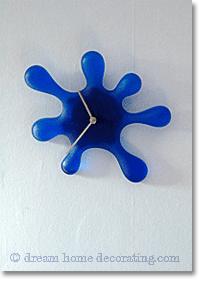
The psychological effects of the color blue are probably universal.
Almost everyone enjoys looking into a blue sky and across a lake or the sea ...
... because there is something calming about an expanse of blue. It appears to free the mind.
In interior decorating, you can use the color blue to create a reflective, 'intellectual' atmosphere: it's not easy to overheat emotionally and get upset or aggressive in a 'cool' environment - and the color blue has actually been shown to lower our blood pressure and heart rate.
The 'see-through' quality of air makes the blue color of the sky look distant.
This psychological effect of the color blue is used in interior design to 'expand' the walls of a room by painting them in light shades of blue (it doesn't work with dark blues!).
You can also use the color blue to cool down a hot, sunny room. Obviously, blue doesn't actually lower the temperature, but it makes us feel cooler. The reverse is true when you're decorating a north-facing room. Blue walls, flooring, or furniture can give it a distinctly 'arctic' feel.
Check out some blue color schemes and see how you feel about using them in your home!
This page is about the effects of blue color ...
... for more info about color psychology, please go to the general psychology of color article.
Blue For Boys?
In Western countries, blue is generally accepted as the 'correct' color for baby boys' clothing, as well as their nurseries. (If you want to test this assumption, try painting your infant son's room pink, give him pink bedding, and then sit back and watch the reactions of your extended family or neighbors :-)
What most people don't know is that - only a century ago - those very same folks would have been appalled to see you surround your little boy with a color as 'delicate and dainty' as ... blue.
Blue For Weight Loss?
The following snippet of advice is something I've never tried myself - please take it with a seriously large pinch of salt. I've read that the psychological effects of the color blue can help you restrain your appetite and lose weight.
So you might consider painting your kitchen and/or dining room blue (and eating from blue plates). If you're going to try this, please let me know if it works!
Reader Comment:
As to the tidbit about blue helping to suppress the appetite ... my family has been eating on blue willow plates for years ... and from experience it HAS NOT helped to suppress the appetite ... thought you would like to know :-)
Karen (USA)
Blue For Kings ... And Queens
Like purple, the color blue has royal connections, and was once very expensive to get hold of.
Lapis lazuli, a semi-precious stone, had to be imported from far-away lands so that painters in Renaissance Europe could grind it to powder and make ultramarine (= 'from-beyond-the-seas') blue.
They used it to paint the garments of saints and royalty. And, of course, lots of skies.
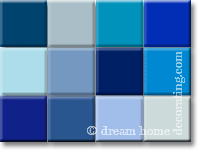
But this is just the recent, European past of the color blue. For thousands of years, and all over the world, people have loved this color. Amazing blue glazes, dyes, and paints were developed as a result.
One of these is a special case: Indigo is a vegetable dye that can produce gorgeously deep, rich and very subtle hues of the color blue.
It's my personal favorite blue, but one that I happen to share with millions of people around the globe: African, Asian and European cultures have used different varieties of the indigo plant to dye interior and clothing fabrics. For thousands of years. (So it really is a lot of people's favorite color.)
If you want to use the psychological effects of the color blue to create a meditative, spiritual environment, indigo is a good candidate for you. In classical Indian philosophy, it is the color associated with the 'third eye', our capacity for intuitive understanding.
To check out the psychological effects of other colors, take your pick from the following links:
 Psychological Effects Of The Color White |
 Psychological Effects Of The Color Grey |
 Psychological Effects Of The Color Black |
 Psychological Effects Of The Color Brown |
 Psychological Effects Of The Color Orange |
 Psychological Effects Of The Color Red |




Yet to find the information you're looking for? Type a word or phrase into the search box below:
Alternatively, return from Psychological Effects Color Blue to the main Color Psychology page, or to the


New! Comments
Have your say about what you just read! Leave me a comment in the box below.