Psychological Effects Of The Color Orange
Use the psychological effects of the color orange to create a warm, energizing feel for your home.
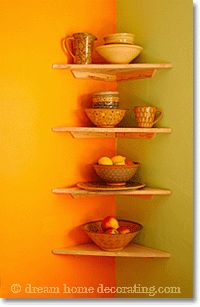
The color orange is generally experienced as the warmest color.
Between yellow and red on the Color Wheel, the psychological effects of the color orange seem to combine those of red and yellow.
Orange is a sensuous color.
It is perceived as emotionally stimulating, energetic, vibrant and fun.
Saturated orange attracts attention ...
... and it also stimulates appetite, similarly to the color red, and is therefore often used in advertising. (And in kitchens. And, of course, restaurants.)
Interestingly, the color orange also has a spiritual connection; it is a holy color in India and Nepal.
Members of the ancient swami order in India dress in orange colored robes. The color recalls the fire ceremony that is performed at their initiation - a symbolic funeral rite in which the swami gives up his attachment to worldly interests and pursuits.
This page is about the effects of orange color ...
... for more info about color psychology, please go to the general psychology of color article.
As with other colors, the effect of the color orange depends on its hue (yellowish or reddish), its tint (mixture with light neutrals) or its shade (mixture with darker neutrals).
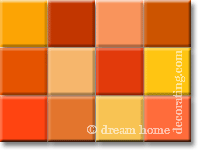
Orange is most powerful when it is not lightened, darkened, or dulled down through mixing with other colors. (If you've ever lived inside tangerine colored walls for any period of time, you'll know excactly what I mean!)
By the same token, the psychological effects of the color orange are much gentler in its pastels and earthy shades.
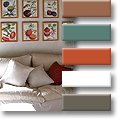
So if you don't want a strong color impact in your home, shades or tints of the color orange will work much better for you. (Check out these orange color schemes to see the variety!)
If, like me, you love Mediterranean style living, consider using different shades of terracotta ('baked earth' - orange mixed with brown and a bit of gray) in your home.
Like nothing else, these hues evoke the warmth and richness of country living in Italy, Spain, and Provence. (Have a look at the Tuscan Paint Color Palette to see what I mean!)
To check out the psychological effects of other colors, take your pick from the following links:
 Psychological Effects Of The Color White |
 Psychological Effects Of The Color Grey |
 Psychological Effects Of The Color Black |


 Psychological Effects Of The Color Pink |
 Psychological Effects Of The Color Purple |
 Psychological Effects Of The Color Blue |


Yet to find the information you're looking for? Type a word or phrase into the search box below:
Alternatively, return from Psychological Effects Color Orange to the main Color Psychology information page, or to the


New! Comments
Have your say about what you just read! Leave me a comment in the box below.