Psychological Effects Of The Color Red
Use the psychological effects of the color red to create a vibrant, stimulating feel for your home.
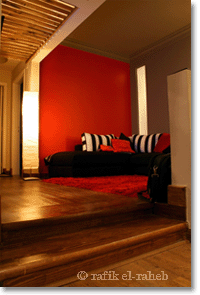
The psychological effects of the color red are very easy to notice - red is an extremely powerful color.
If you're human (please contact me if you're not! ;-), your blood will be red, regardless of your race and native country.
And since spilling a lot of blood is not entirely healthy for us earthlings, the color red often signals danger:
- Fire is red (well, sort of) ...
- ... and so are fire engines.
- (OK, so London buses are red, too. Fine. An exception to the rule. Just like your brother's bright red Porsche ;-)
- Stop signs are a vibrant red (essential when driving a Porsche).
- A 'red alert' always signifies the highest level of threat, with the effect of galvanizing people into action.
The color red is said to raise our levels of passion:
- Angry people 'see red';
- bold, spirited young men are called 'red-blooded'...
- ... they also used to go out and "paint the town red" (but I think that was in the century before last.)
This page is about the effects of red color ...
... for more info about color psychology, please go to the general psychology of color article.
Red is a very immediate color; it appears closer than it is. Psychologically, a room with red walls will 'close in on you'.
Along with the color orange, red is a favorite with the food-packaging industry and with restaurants: it is said to enhance our appetite.
Therefore, interior design professionals sometimes suggest using it for dining room walls (if you're on a diet, maybe you could try blue instead?).
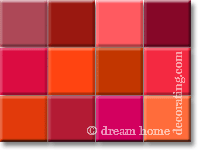
As with other colors, the psychological effects of the color red depend very much on its intensity.
So while vibrant, saturated hues of red have been shown to raise people's heart rate and blood pressure, you might feel quite comfortable with muted, warm, earthy shades of red around you, for example:
- red ochre,
- venetian red,
- brick red, or
- cotto.
That's the type of red color where you get all the warmth, comfort and energy, but with none of the exaggerated pulse. (Here are some examples of red color schemes for interior design!)
To check out the psychological effects of other colors, take your pick from the following links:
 Psychological Effects Of The Color White |
 Psychological Effects Of The Color Grey |
 Psychological Effects Of The Color Black |


 Psychological Effects Of The Color Pink |
 Psychological Effects Of The Color Purple |
 Psychological Effects Of The Color Blue |


Yet to find the information you're looking for? Type a word or phrase into the search box below:
Alternatively, return from Psychological Effects Color Red to the main Color Psychology information page, or to the



New! Comments
Have your say about what you just read! Leave me a comment in the box below.