Psychological Effects Of The Color White
Use the psychological effects of the color white to create a crisp, clean feel for your home.
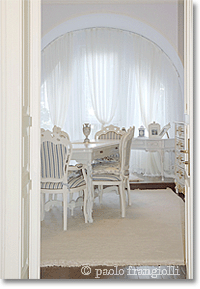
You'd think that the psychological impact of the color white is pretty much the same around the globe, but that's not true.
Different cultures associate very different feelings, moods, 'meanings', and psychological effects with this color.
For example, if you grew up in a Western society, you'll probably see white as a 'clean', pristine color ...
... think weddings, clouds dotted over an April sky, fresh snow, spring blossoms and similar nice things. (Or maybe TV commercials featuring happy people and their washing machines!)
On the other hand, if you are from parts of China or Japan where white is the traditional color of death and mourning, the psychological effects would be quite different, and you'd prefer to have as little white color as possible around your home.
Whereas, if you live in northern India, you're likely to paint your walls white, while your traditional wedding colors will likely be glorious red and gold.
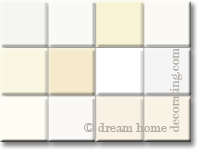
Interior design in Western societies uses the color white to create an airy, pure, clear, serene feel for a home.
On floor, walls and furniture, the color white can make a room feel larger than it is and add a crisp freshness to an interior design scheme.
To take advantage of the psychological effects of the color white, you don't always need a lot of it. Just accents, for example window and door frames painted in white, cream or ivory, can lift the look and feel of a whole room.
On its own, pure brilliant white can look sterile or high-maintenance, particularly with very sleek interior design styles that involve lots of polished surfaces.
To soften the look of a room, the 'secret' is to layer up tints (from chalky white to ivory) and textures (in walls, textiles, and floor coverings). This will help make a white room warmer and more inviting - both psychologically and physically.
This page is about the effects of white color ...
... for more info about color psychology, please go to the general psychology of color article.
If you don't want a lot of color around you but aren't too keen on all-white environments either, you can always enjoy the psychological impact of white color in combination with other neutrals.
Gray, brown and black look great with white! You'll find more information on how to use them in the chapter on Neutral Color Palettes.
To check out the psychological effects of other colors, take your pick from the following links:


 Psychological Effects Of The Color Brown |
 Psychological Effects Of The Color Orange |
 Psychological Effects Of The Color Red |
 Psychological Effects Of The Color Pink |
 Psychological Effects Of The Color Purple |
 Psychological Effects Of The Color Blue |


Yet to find the information you're looking for? Type a word or phrase into the search box below:
Alternatively, return from Psychological Effects Color White to the main Color Psychology information page, or to the




New! Comments
Have your say about what you just read! Leave me a comment in the box below.