Neutral Color Schemes & Neutral Paint Colors:
How To Put Neutral Color Palettes Together
Neutral color schemes aren't as easy to master as one should think. But the elegant, subtle interiors you can create with the right neutral paint colors & interesting accent colors are every bit worth the effort.
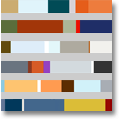
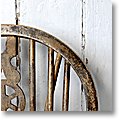
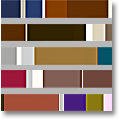
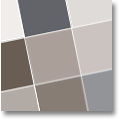
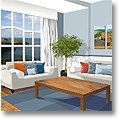
With natural wooden furniture, whitewashed walls and handspun linens ...
... many traditional European interiors (like Swiss or Tuscan ones) are good examples of neutral color home decor.
Neutral color palettes range from achromatic greys to 'biased' neutral hues, all the way to accented neutral color combinations.
More about this in my FREE e-book, Stylish Neutrals! Also, check out the psychological effects of neutral color, too: white, gray, brown or black.
Very Neutral Color Schemes: Warm & Cool Grey

White, grey, black & nothing else
↑ This is probably not a color scheme you would want to have in your home, because it contains no color whatsoever. It's also unrealistic: real neutral paint colors, neutral carpet colors and neutral fabrics usually have at least some warm or cool color bias, like our next sample:

Pantone cool greys (left), Pantone warm greys (right)
↑ The left and right sides of this palette are clearly different, both from each other and from the super-neutral color scheme above. The left side has a bluish cast and the right side has a reddish-brown bias.

Cool (bluish) neutrals left, warm (reddish-brown) neutrals right
↑ Now, if we continue 'pouring' more and more blue color into the left side, and more and more maroon into the right, we'll soon leave the 'grey zone'. This is important because ...
... There's A Secret.
The secret to putting great neutral color schemes together is to
- identify the underlying color in all neutrals, and to
- create neutral color palettes as if they consisted of 'real' colors.
- The free "Stylish Neutrals" e-book has all the details!
Below are some examples:
Biased Neutral Color Schemes

Neutral color palette with a blue-orange complementary bias
↑ On the 3-primary color wheel chart, blue and orange are complementary colors, and the pair often look great together, even when they're quite desaturated.
The color orange is often overlooked in neutral color palettes; it appears in loads of wood stains and is a serious contributor to many 'neutral' color combinations that contain oil-based wood finishes. Pine, teak, golden oak, Shaker maple are orange elements to watch out for.

Neutral color palette with a red-green complementary bias
↑ What is true for orange is often also true for red wood stains like cherry, mahogany, or cedar, so make sure you consider these hues as part of your neutral color palette!
The above 'red-green' neutral color combination plays a greyed-down sage hue off against a pinkish, mushroomy grey-brown. This works in most cases; red-green complementaries usually look good together, no matter how saturate or muddied they are.
Next up, a few basic neutral color palettes with an added accent colors:
Accented Neutral Color Scheme Ideas

Blue-yellow 'opposing' colors with charcoal, grey & white neutrals
↑ This neutral palette consists of a cool grey and a brassy, grayish yellow in different tints & shades. The added deep royal blue is the clearest color in this group (even though it does have a lot of black in it). The yellow-blue contrast is eye-catching, and it enlivens the color scheme (blue is the 'psychological primary' of yellow).
Best wall colors: Whipped cream, pale tan, light chalky grey.
Best wood stain: Oak.


Cool grey + warm grey + cool grey + warm light grey
cool pink + coral red
↑ There's no need to choose between warm and cool neutrals - basically, just use them as the colors you can see 'inside' them. Here's an accented neutral color scheme that combines yellowish and bluish neutrals with a cool (bluish) pink and a warm, slightly orangey red.
Best wall color: White. (Optional pink or coral accent wall.)
Best wood stain: Walnut.


Camel (warm beige) + deep purple + pale lavender + light warm grey + lavender + more camel
↑ This is a toned-down, complementary color scheme: 'yellow' and purple. Using a neutral yellowish color palette as a backdrop for purple hues works much better in interior design than using fully saturate (=garish) hues of yellow and purple.
Best wall colors: Milky white, camel, palest lavender.
Best wood stains: Dark hardwoods.

Pine + bluish-gray midtones + white + chartreuse
↑ You could read this palette as an analogous color scheme of blue and green - because despite the gray content of the blue, the color is still recognizable as a blue, and it works harmoniously with the two green hues.
Best wall colors: Pale cool grey, white.
Best wood stain: Rustic pine, antique cherry.


Deep pinkish brown + warm grey + rich red + charcoal + cream + maroon
↑ This is a wonderfully wholesome Alpine color palette: A neutral color scheme with added deep red. Think linen shirts with red cross-stitch embroidery, richly decorated Alpine houses, that sort of thing :-) It's a reliable, simple accented neutral color scheme that always works.
Best wall colors: Warm white, with a red accent wall.
Best wood stains: Antique mahogany, grey driftwood.
More Neutral Color Schemes With Added 'Real' Colors
On The Following Pages
(Click A Pic):


More Information About Using Color:


And here's yet more inspiration for creating neutral as well as 'real' color schemes:
- When you understand the color wheel chart, you can take neutral color schemes to a whole new level.
- The Four-primary color wheel has some great inspiration for neutral color palettes as well.
- Knowing how warm and cool colors work is absolutely crucial for creating neutral color schemes.
- Both the French and the Tuscans use accented neutral color schemes a lot. Get inspired by the earth tone color schemes in Tuscan art prints or by colorful frugal French decor ideas!
- How to find the best neutral color combinations: Get the basics right with Interior Design Colors 101 and Choosing Paint Color 101!
- Neutral Color Palettes - The
Book:
Learn about using neutral color palettes in your home. Understand what makes neutral color combinations look their best, and what happens when you inject 'real' color into neutral color schemes. It's FREE!!

New! Comments
Have your say about what you just read! Leave me a comment in the box below.